

Back to the Future — How a Movie Turned the DeLorean into an Automotive Icon
What happens when an unusual sports car meets one of the most beloved movie franchises of all time?
You get a cultural icon that outlives the car itself.
The DeLorean DMC-12 was never a sales success. Its manufacturer struggled financially, production ended in 1982, and the company collapsed shortly afterward. Yet today, more than four decades later, the DeLorean remains instantly recognizable, even to people who know very little about cars.
The reason? A certain time-traveling scientist that modified this forgotten sports car and a movie released in 1985.
On Back to the Future Day, let's explore how Hollywood rescued the DeLorean from obscurity and turned it into one of the most recognizable cars in pop culture.
The DeLorean: A Car Ahead of Its Time
The DeLorean DMC-12 was the creation of John Z. DeLorean, a former General Motors executive who wanted to build a distinctive sports car that challenged the conventions of the automotive industry.
Its design was unlike almost anything else on the road:
- Brushed stainless-steel body panels.
- Gullwing doors.
- A futuristic wedge-shaped silhouette.
- A rear-mounted 2.85-liter V6 engine.
The car looked like it belonged in a science-fiction movie, and that was precisely what made it so memorable. But its real-world story was less glamorous. Production delays, financial difficulties, disappointing performance compared with its futuristic appearance, and the company's collapse meant the DMC-12 never became the commercial success its creator had envisioned.
By 1983, the DeLorean Motor Company had ceased operations.
The car was effectively a footnote in automotive history.
Until Hollywood came calling.
The Time Machine That Changed Everything
In 1985, Back to the Future introduced audiences to Marty McFly, Doc Brown and a time machine disguised as a DeLorean.

The choice was inspired.
The stainless-steel body already looked futuristic, while the gullwing doors made the car feel like something from another era. The filmmakers transformed it with fictional technology, including the flux capacitor, time circuits and the famous 88 mph requirement.
Suddenly, the DeLorean wasn't just an unusual sports car. It was the time machine.
The film's enormous success turned the car into an international pop-culture icon. Its sequels in 1989 and 1990 reinforced that connection, giving fans new versions of the machine to remember; from the flying DeLorean to rail running version of the 3rd movie.
For generations of movie fans, the association became permanent:
DeLorean = Back to the Future.
Hollywood Gave the DeLorean a Second Life
Here's the remarkable part: Back to the Future didn't simply make the DeLorean famous during the 1980s. It preserved its cultural relevance long after the original company disappeared.
The car became a fixture at movie conventions, fan gatherings, automotive events and museums. Enthusiasts began restoring original cars and creating replicas of the time machine.
The film also changed the way people viewed the real DMC-12. What might otherwise have been remembered primarily as an ambitious commercial failure became a desirable piece of automotive and cinematic history.
The DeLorean's legacy is now inseparable from the movie that immortalized it.
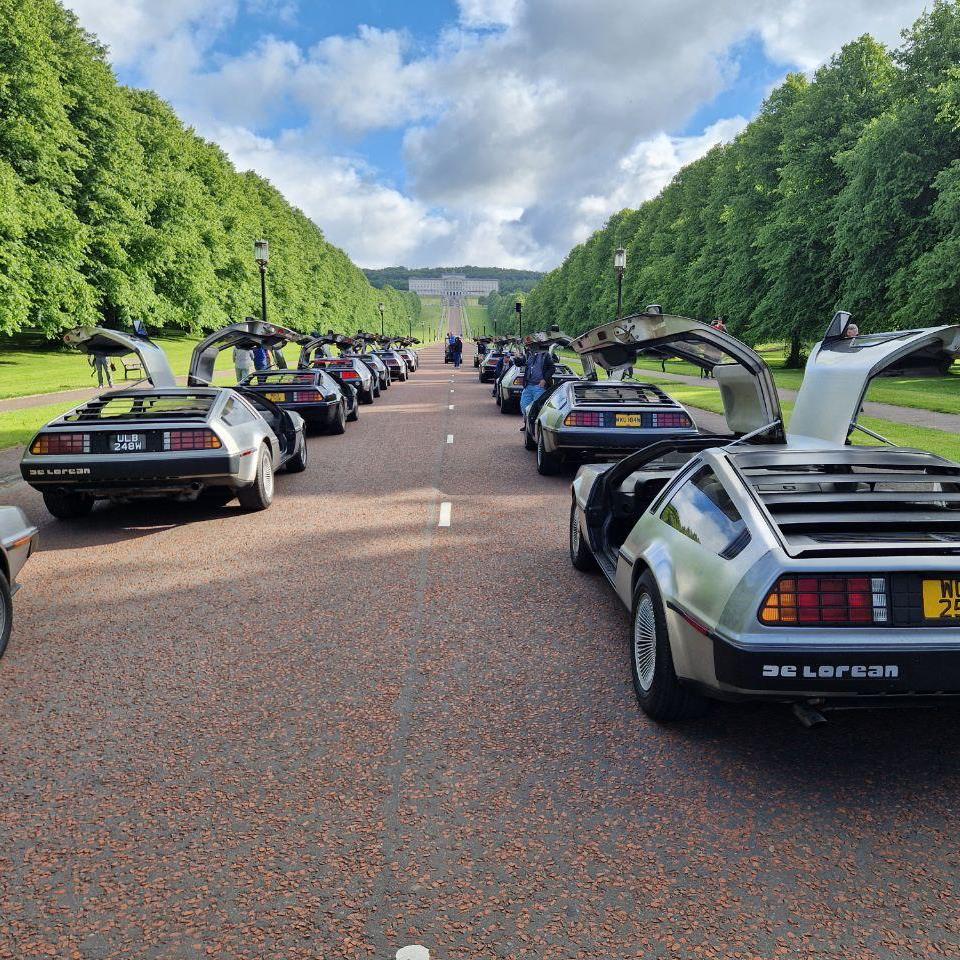
DeLorean Eurofest 2026
Why Car Enthusiasts Love the DeLorean
The DeLorean occupies an unusual position in car culture.
It isn't the fastest sports car of its generation. It wasn't a dominant racing machine, and its original performance figures were relatively modest compared with many contemporary sports cars.
Yet enthusiasts continue to admire it for several reasons:
- Design: Stainless steel and gullwing doors give it a silhouette unlike almost anything else.
- History: Its short production run and dramatic corporate story make it fascinating.
- Pop culture: The Back to the Future connection gives it a global audience.
- Individuality: It represents a bold attempt to build something different rather than follow established conventions.
For many enthusiasts, the DeLorean is proof that a car's legacy isn't determined by horsepower, lap times or sales figures alone. Sometimes, the story matters just as much as the machine.
The DeLorean in the Diecast World
For diecast collectors, the DeLorean offers something special: one real car with several distinct identities.
You can collect a relatively faithful miniature of the production DMC-12, a movie-accurate time machine, or one of the flying versions featured in the sequels.


That makes the DeLorean particularly interesting in 1:64 scale. Different manufacturers can interpret the same vehicle in very different ways, focusing on its original automotive design, its movie modifications or its futuristic appearance.
And because Back to the Future has remained popular across generations, the DeLorean appeals to both automotive enthusiasts and collectors who grew up watching the films.
It's not just another silver sports car on the shelf. It's a piece of movie and pop culture history.
Forty Years Later, the Future Is Still Here
The original Back to the Future premiered in 1985. Four decades later, its DeLorean remains one of the most recognizable movie vehicles ever created.
The irony is wonderful: a car that struggled to succeed in the real world became immortal through a fictional machine built to travel through time.

Without Back to the Future, the DeLorean might still be an interesting chapter in automotive history, we cannot know. But with it, the car became a symbol of adventure, imagination and the possibility of changing the past.
This feeling is reason enough for, on October 21st (today), fans celebrate more than a movie.
They celebrate a cultural phenomenon that brought an obscure sports car back from the edge of automotive obscurity. GREAT SCOTT!
So, if you could take one DeLorean for a spin, which would you choose: the original DMC-12, the classic time machine, or the flying version?